
Short-Term Rental (Airbnb) Returns in Miami (2026)
21 August 2026
Miami is one of America's strongest short-term rental markets — and one of its most tightly zoned. The success formula has three layers: legal location + the right licences + honest ADR×occupancy math. This guide covers all three; for the city's general investment profile see our Miami investment guide, and for the tax stack our taxes guide.
Legality First: Where Is It Allowed?
- City of Miami: short-term rentals are allowed only in specific transect zones — T5/T6 and commercial zones qualify; single-family zones like T3 and T4-R are restricted. Verify the parcel's transect code before buying.
- Miami Beach: vacation rentals are banned in all single-family homes and many multi-family zones; the permitted map is narrow and fines are heavy.
- Building rules override: even where zoning allows, a condo association can ban stays under 30 days — verify "Airbnb-friendly" claims in the association documents.
The Licence and Tax Chain
| Requirement | Authority | Note |
|---|---|---|
| Vacation rental licence | Florida DBPR | Mandatory at state level |
| Business Tax Receipt (BTR) | City/county | Location-based |
| Resort tax | Miami Beach: 4% | On the lodging charge |
| Convention development tax | Miami-Dade: 3% | + state sales tax on top |
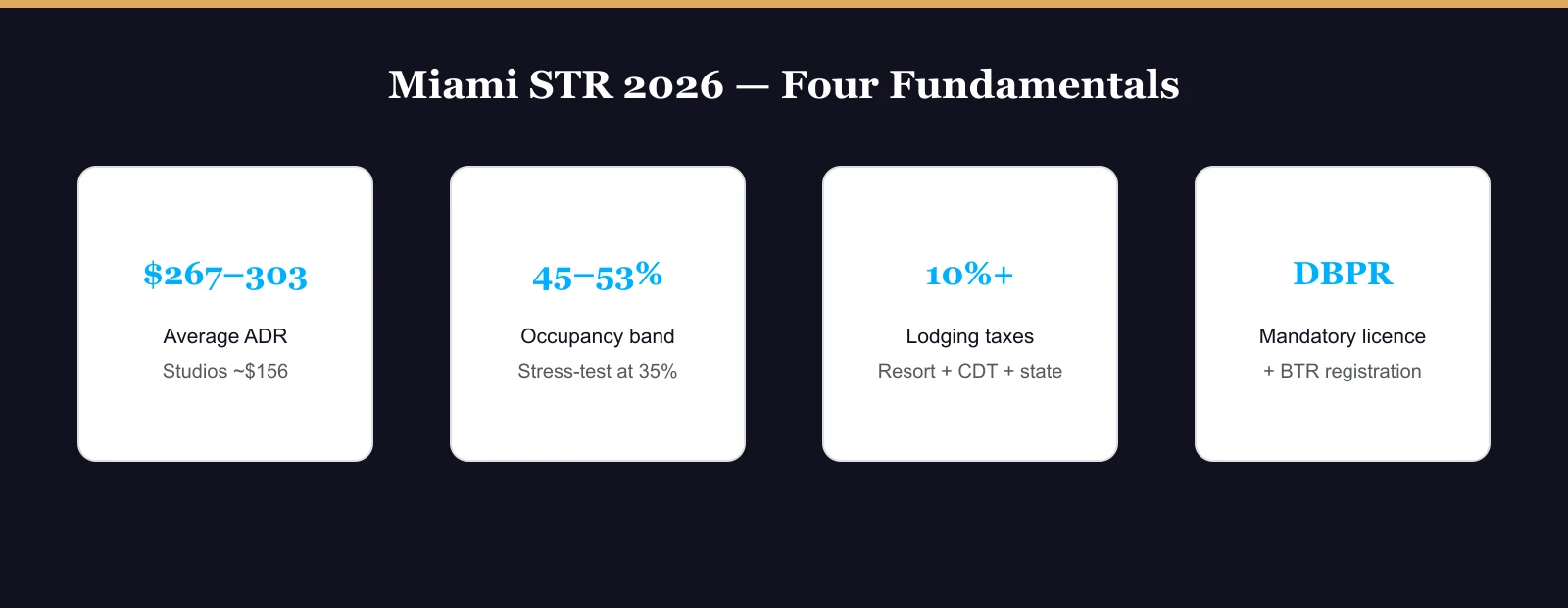
The practical takeaway: over 10% of the guest's price goes to taxes (platforms collect part automatically); build pricing tax-inclusive.
The Submarket Report Card: What Works Where?
| Submarket | STR eligibility | ADR character | Note |
|---|---|---|---|
| Brickell / Downtown | Building-permission based in T6 towers | Mid-high; business + events demand | The most balanced year-round occupancy |
| Miami Beach (permitted pockets) | Narrow map; strict enforcement | Highest ADR | Highest fine risk — parcel verification essential |
| Wynwood / Edgewater | Commercial/T5-T6 mix | Mid; young-traveller profile | Spikes in event weeks |
| Airbnb-friendly new projects | Designed for STR from day one | Mid; dense competition | Integrated management — easiest for remote owners |
2026 Market Data: ADR and Occupancy
- Average daily rate (ADR): the $267–303 band; ~$156 for studios, $1,100+ for large villas.
- Occupancy: a wide 32–53% range depending on source and submarket — plan at 45–50% and stress-test at 35%.
- Seasonal rhythm: December–April (high season + the events calendar) carries the year; summer requires price flexibility.
Worked Example: STR Math on a Two-Bed Condo
A $600,000 two-bed in an STR-friendly building on the Brickell fringe:
- Income: ADR $250 × 50% occupancy × 365 ≈ $45,600/yr (cleaning fees paid by guests)
- Costs: platform+management (22%) 10,000 + extra insurance/licences 2,500 + supplies/maintenance 3,000 ≈ $15,500
- Property carrying cost (tax+HOA+insurance) ≈ $23,000 → net ≈ $7,100 (1.2%) + appreciation
The break-even comparison: the same unit would gross ~$38,400 on an annual lease (see the worked example in the investment guide). In this scenario STR only beats the annual lease net once occupancy clears 55–60%. In Miami, STR is not "the model that earns more everywhere" — it is a right-location + professional-operation business.
5 Operating Rules That Make STR Win
- Price to the events calendar: F1, Art Basel and Ultra weeks can double ADR with dynamic pricing.
- Photos + the first 10 reviews: the ranking algorithm's fuel; keep opening-month prices deliberately low.
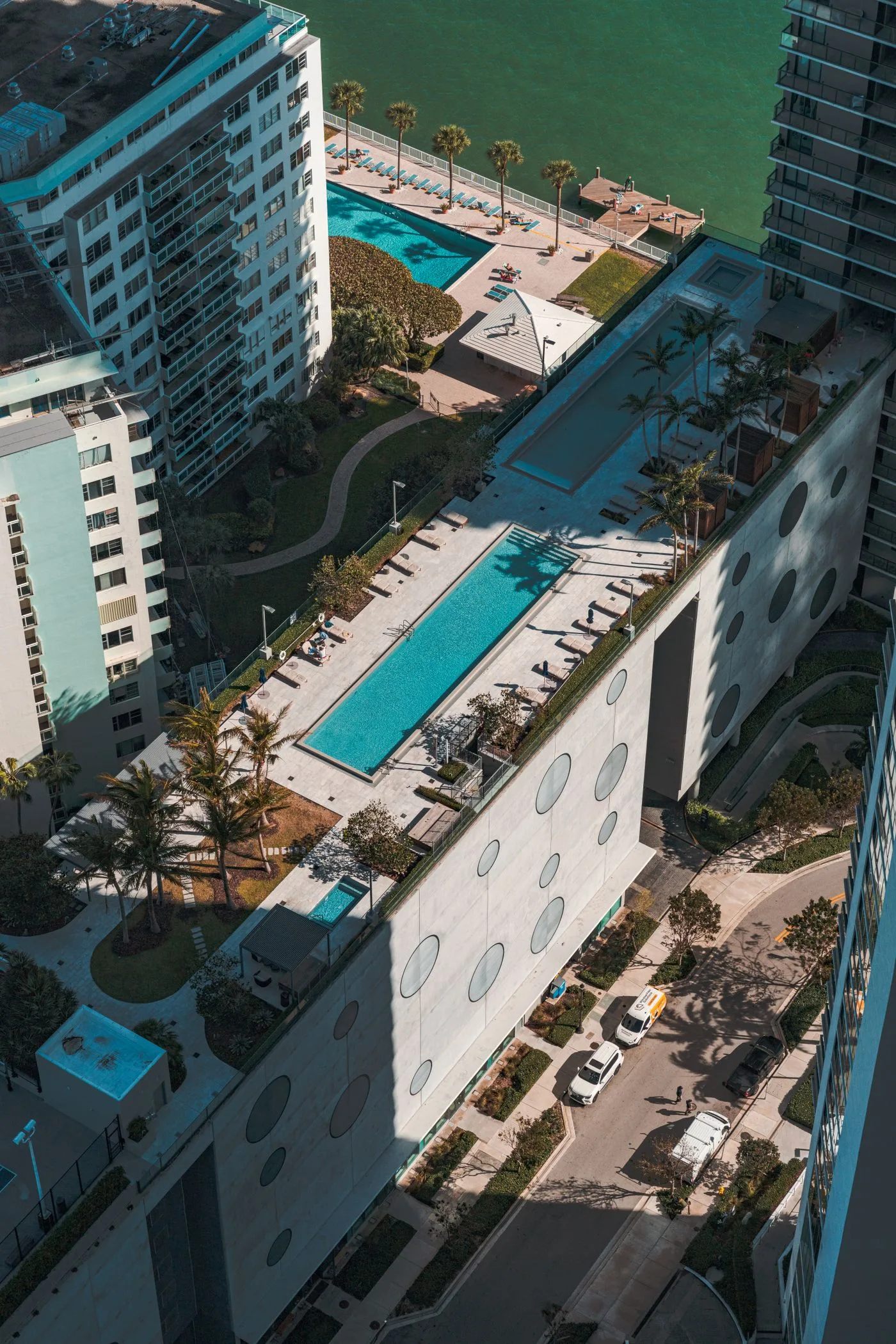
- Sell the amenities: Miami guests buy the building's pool and facilities — put them in the listing title.
- The mid-term hedge: fill summer gaps with 1–3 month corporate/digital-nomad lets (30+ days, allowed in most buildings).
- Automate the taxes: put resort/CDT filings on a monthly calendar; penalty interest eats margins fast.
Who Is the Model Right For?
- Right for: investors buying in STR-permitted zones/compatible buildings, ready to work with professional management, able to carry the seasonal wave.
- Wrong for: remote "set-and-forget" passive-income seekers depending on one unit's cash flow — the annual lease model is healthier for that profile.
Reach our advisors for current options in STR-friendly buildings and a building-rules pre-check.
Frequently Asked Questions
Is Airbnb legal everywhere in Miami?
No. In the City of Miami it is allowed only in T5/T6 and commercial transect zones; Miami Beach bans it outright in single-family homes. Verify the parcel code and building rules before buying.
Which licences do I need?
A Florida DBPR vacation rental licence plus a local Business Tax Receipt (BTR). Miami Beach adds resort-tax registration; unlicensed operation draws heavy fines.
How much are the lodging taxes?
Miami Beach 4% resort tax + Miami-Dade 3% convention tax + state sales tax — together exceeding 10% of the guest price. Platforms collect part automatically.
Where are ADR and occupancy in 2026?
ADR sits in the $267–303 band (studios ~$156); occupancy runs 32–53% by submarket. Plan at 45–50% and stress-test at 35%.
Is Airbnb more profitable than an annual lease?
Not always. In our worked example STR beats the annual lease net only above 55–60% occupancy. Location and operating quality decide it.
Can a condo association ban Airbnb?
Yes — even with permissive zoning, associations can ban stays under 30 days. Verify 'Airbnb-friendly' claims in the association documents.
How do I manage the summer dip?
Fill it with 1–3 month mid-term lets (corporate, digital nomads); 30+ day stays are allowed in most buildings and cut cleaning/turnover costs.
Is professional management essential?
For remote owners, practically yes: for a 15–25% fee it takes over pricing, guest comms, cleaning and tax filings.