More
Average Home Prices by State

Real estate values in the United States exhibit a heterogeneous structure depending on regional economic development, labor migration, and local zoning restrictions. 2026 projections indicate that while high costs persist in coastal states, the rate of price increases in the inland “Sun Belt” states is normalizing. While the national average home value hovers around $357,275, this figure spans a wide range from $250,000 to $1 million on a state-by-state basis.
General Price Comparison by State
Data from 2026 reveals that new housing stock entering the market has created room for negotiation in favor of buyers, and the average time homes stay on the market before sale has stabilized at 35 days. Price differences between states reflect not only property costs but also the living standards and economic opportunities in those regions.
| State | Median Single-Family Home Price (2026 Projection) | Annual Price Change (%) | Median Home Value (All Types) |
|---|---|---|---|
| Hawaii | $975,500 | +3.49% | $743,000 |
| California | $866,100 | -0.62% | $833,000 |
| Massachusetts | $749,900 | +3.37% | $615,000 |
| Washington | $659,000 | +1.37% | $630,000 |
| Colorado | $640,000 | -1.19% | $582,000 |
| New York | $576,000 | +6.76% | $576,000 |
| Florida | $434,000 | -2.30% | $412,000 |
| Texas | $340,000 | -0.08% | $338,000 |
| Illinois | $286,000 | +6.88% | $286,000 |
| West Virginia | $259,000 | +5.69% | $249,000 |
Classification of Expensive, Mid-Range, and Affordable States
Market analysts divide states into three main categories in terms of purchasing power and investment cost. The expensive states category includes regions like Hawaii, California, Massachusetts, and Washington DC; limited land supply and high-tech-focused employment keep prices above $700,000 in these areas. The mid-range states group includes regions like Florida, Virginia, and Arizona, offering costs in the $350,000 to $550,000 range, though 2026 sees prices in these regions suppressed by high interest rates, experiencing a real cooling. The affordable states segment consists of regions like West Virginia, Mississippi, and Arkansas, where housing prices are below $260,000; these states maintain their appeal, particularly for remote workers and the retired population.
Who Can Buy a House in America?
The United States has one of the most liberal property rights regimes in the world for foreign investors. Federal laws do not restrict non-US citizens from acquiring real estate; on the contrary, they constitutionally guarantee property rights.
Can Foreigners Buy Houses?
It is completely legal for foreign nationals to purchase homes, apartments, commercial buildings, or land in the US. It is recorded that foreigners purchased approximately 100,000 properties in the 2021-2022 period, and this rate follows a stable course in 2026 with international capital mobility. However, as of 2026, new regulations have been introduced in at least 22 states regarding the purchase of land, especially near military facilities or critical infrastructure, by individuals linked to “foreign adversary countries”; therefore, investors must carefully review local state laws.
Is a Residence Permit Required?
There is no requirement to hold a Green Card or visa to own property in America. Even a foreign investor who has never entered the US can acquire property through a legal power of attorney or a company (LLC) established in America. However, a crucial point is that owning a house in the US does not automatically grant a residence permit, work permit, or citizenship rights. On the other hand, while Green Card holders have the same credit conditions as US citizens during the financing stage, lending institutions may demand higher down payments and additional documentation for visa holders or non-resident foreigners.
Situation for Turkish Citizens and Tax Regulations
Turkish citizens represent an active investor group in the US market. The “Avoidance of Double Taxation Agreement” in force between Turkey and the US allows investors to offset the income tax paid in the US against their tax liabilities in Turkey.
Key procedures that Turkish investors should consider are:
- ITIN Number: Turkish citizens who do not have a US Social Security Number (SSN) are required to obtain an Individual Taxpayer Identification Number (ITIN) from the IRS to file tax returns.
- Rental Income Taxation: Instead of a gross 30% withholding tax applied to passive rental income, investors can choose the “Effectively Connected Income” option; this allows them to be taxed at lower rates on the net amount remaining after deducting expenses such as mortgage interest, property tax, insurance, and depreciation.
- Depreciation Period: The depreciation period for residential buildings for foreign investors is determined as 30 years; this is an advantage that significantly reduces the annual tax base.
Is it More Advantageous to Buy or Rent?
The economic conjuncture in 2026 is shaped by high interest rates and slowing rent growth rates, which directly affect the “buy vs. rent” decision. In the decision-making process, individual financial capacity and the duration of stay in the relevant region play a primary role.
Advantages of Buying and Financial Return
Buying a home stands out as a tool for “automatic savings” and wealth accumulation, especially in a perspective longer than 5 years.
- Equity Accumulation: A portion of every mortgage payment reduces the principal, increasing the owner’s share in the property. According to 2026 projections, when both principal payments and an annual 2-3% value increase are combined over a 5-year period, the property owner can achieve a net asset increase of tens of thousands of dollars.
- Inflation Protection: A homeowner with a fixed-rate mortgage fixes their housing cost for 30 years; whereas tenants remain vulnerable to rental inflation increasing at an average of 4% annually.
- Tax Advantages: Homeowners can deduct mortgage interest and state-based property taxes from their federal tax base within certain limits.
Advantages of Renting and Flexibility
For those with short-term settlement plans (1-3 years) or those prioritizing cash liquidity, renting can be a more rational choice in the 2026 market.
- Low Initial Cost: The closing costs (2-5% of property value) and the 10-20% down payment required for purchasing are not an issue for tenants.
- Maintenance Responsibility: High-cost responsibilities such as roof repair, plumbing failures, or garden maintenance belong entirely to the landlord.
- Liquidity Management: Capital set aside for a down payment can be evaluated in the stock market or other investment vehicles, optimizing opportunity cost.
Comparison for Investment vs. Living Purposes
According to 2026 data, high rental yields in states like Illinois (8.94% yield) and Pennsylvania make buying attractive for investors; whereas in regions like Seattle or California, mortgage payments being 30-50% higher than rental costs makes renting more financially sustainable for living purposes.
| Criterion | Renting (2026) | Buying (2026) |
|---|---|---|
| Monthly Cash Flow | Generally more predictable | Variable (tax and insurance increases) |
| Wealth Accumulation | None | High (Equity + Appreciation) |
| Maintenance Expenses | Landlord pays | Property owner pays |
| Initial Capital | 1-2 months deposit | 3% – 20% Down Payment + Closing costs |
| Flexibility | Very High | Low (Sale process takes 3-6 months) |
Advantages of Buying a House in America
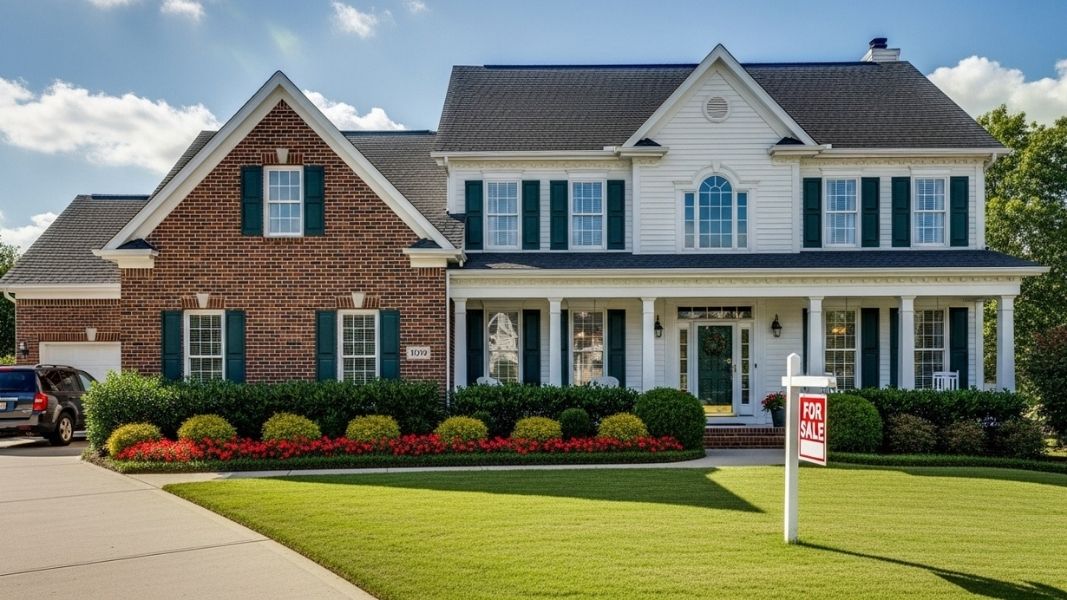
Entering the US real estate market means not only acquiring a physical asset but also integrating into one of the world’s deepest and most transparent financial systems. Stabilized market conditions in 2026 reinforce the sustainability of these advantages.
Investment Return and Capital Appreciation
Housing prices in the US have historically performed above inflation in the long term. In 2026, the pulling of nominal growth to more “normal” levels of 2.2% indicates that speculative bubbles in the market have been cleared and a healthy value appreciation process has begun. Especially in states where the population is rapidly increasing, such as Idaho, Utah, and South Carolina, capital appreciation carries the potential to trend above the national average.
Legal Security: Title Insurance and Escrow System
The strongest aspect of the US property system is the mechanisms that protect the buyer from all kinds of fraud and legal liabilities from the past.
- Title Insurance: Protects the buyer against claims that may arise due to ownership errors, forgery, unpaid inheritance debts, or mortgages in the property’s history. With a one-time premium, the property owner and their heirs are secured for life.
- Escrow Account: During the buying and selling process, money and documents are held at a neutral third-party escrow office. Payment is not released to the seller until all contract conditions are met and registration is made at the title deed office, which reduces financial risk to zero.
Rental Income Potential and Dollar-Based Cash Flow
For foreign investors, owning property in the US means earning regular income in dollars, the world’s strongest reserve currency. The rise of average rental prices to $1,326 in 2026, and to $1,900 for new leases, offers a strategic opportunity for cash-flow-focused investors. In the short-term rental (Airbnb) market, annual yields can reach levels of 13-14% in niche regions such as Port Arthur (Texas) or Charleston (West Virginia).
Which State Has the Cheapest Homes in America?
America’s interior regions and some Southern states still offer the opportunity to own a home at costs less than half the national average in 2026. This is explained by the low cost of living and vast land stock.
Affordable States and 2026 Data
According to the economic affordability index, the cheapest states are:
- Mississippi: With a median home price of $161,400, it is the most affordable state in the US. The cost of living index is 85.3, well below the national average.
- West Virginia: In this state where property can be acquired for an average cost of $225,506, the annual property tax is only $835.
- Arkansas: Draws attention with a median price of $169,867 and a cost of $95 per square foot.
- Oklahoma and Iowa: Housing prices in these states hover in the $230,000 – $245,000 band, and food and energy costs are quite low.
Why Are They Cheaper?
The main macroeconomic reasons behind the low prices in these regions are:
- Low Demand Pressure: Compared to coastal cities (New York, San Francisco), lower population density and limited internal migration to these states suppress prices.
- Employment Structure: In states like Mississippi, the median household income remaining at the level of $54,915 limits the ceiling price that the local population can pay for housing.
- Zoning Flexibility: In these states with no land constraints, new construction costs and permitting processes are much faster and more economical.
How Much is Property Tax in America?
Property Tax, one of the most important cost items of owning property in America, constitutes the main revenue source of local governments (counties and cities). These taxes are used directly for the financing of local schools, roads, and public safety.
What is Property Tax and How is it Calculated?
Property tax is calculated using local tax rates (mill rate) over the “assessed value” of the property. The assessed value is not always equal to market value; in some states, 70-80% of the market value may be taken as the basis. Taxes are usually paid annually or collected monthly by including them in mortgage installments (escrow account).
Variation of Tax Rates by State
The tax burden is balanced according to whether the state collects Income Tax or Sales Tax. For example, in states like Texas and New Hampshire that do not have income tax, property taxes are generally high.
| State | Average Tax Rate (%) | Annual Tax for a $400,000 Home |
|---|---|---|
| New Jersey | 2.23% | $8,920 |
| Illinois | 2.08% (Estimated) | $8,320 |
| Texas | 1.60% (Estimated) | $6,400 |
| California | 0.71% (Estimated) | $2,840 |
| Alabama | 0.40% (Estimated) | $1,600 |
| Hawaii | 0.27% | $1,080 |
As of 2026, many local governments have updated tax rates due to increasing property values; however, legal initiatives have been launched in states like Florida to lower taxes for primary residences.
Which is the Richest State in America?
A state’s wealth is measured by median household income and GDP per capita. High income levels bring both high prices and strong rental demand in the housing market.
High-Income States and 2026 Profile
According to 2026 economic data, the most prosperous regions of the US are:
- District of Columbia (Washington DC): With a median household income of $109,707, it is the richest region in the country. This high income keeps median home prices above $920,000.
- Massachusetts: With a median income of $99,858, it is the center of technology, biotechnology, and education sectors.
- New Jersey and Maryland: With income levels of $99,781 and $98,678 respectively, these are states where a highly qualified workforce is concentrated.
- Washington State: Especially with the presence of tech giants, median household income has risen to $98,141.
Impact on the Real Estate Market
In wealthy states, the real estate market has a “supply-constrained” structure. Homeownership rates in these regions are generally lower; for example, only 40% of the public in DC are homeowners. For investors, this situation means high rental rates and low vacancy rates. However, the continued nominal increase in housing prices in these states in 2026 makes it difficult for them to provide “real appreciation” above inflation.
Buying a House with a Mortgage in America
The mortgage system, which is the most common way to acquire property in America, also offers wide opportunities for foreign investors. Interest rates stabilizing around 6% in 2026 have made buying property using credit “attractive again.”
Can Foreigners Use Mortgages?
Yes, foreigners can use financing in the US; however, the application process differs according to legal status.
- Green Card and Visa Holders (E-1, E-2, H-1B, L-1): If these individuals have a US credit history, they can benefit from FHA (3.5% down payment) or conventional loans.
- Non-Resident Foreigners (Foreign Nationals): Individuals with no credit history in the US can provide financing through “Foreign National Loans” with down payments ranging from 20% to 40%. The main criterion in these loans is usually the ratio of the rental income the property will bring to cover the loan installment (DSCR loan).
Down Payment and Interest Rate Projections
Typical mortgage conditions in 2026 are as follows:
| Loan Type | Typical Down Payment Rate | Average Interest (2026) | Critical Requirement |
|---|---|---|---|
| Conventional (Resident) | 3% – 10% | 6.0% – 6.3% | FICO Score > 620 |
| FHA (Resident) | 3.5% | 6.2% – 6.5% | Flexible credit criteria |
| Foreign National (Non-QM) | 25% – 40% | 6.75% – 7.5% | Passport + Bank Statement |
| ITIN Loan | 15% – 20% | 7.0% – 8.0% | ITIN Number |
| DSCR (Investor) | 20% – 30% | 7.5% – 8.5% | Property Cash Flow |
Pros and Cons
Pros:
- Leverage: Offers the opportunity to benefit from the increase in the full value of the property with a low down payment.
- Repayment via Rent: In the right areas, rental income can cover the mortgage installment, taxes, and insurance; this allows the property to pay for itself.
- Fixed Cost: With fixed-rate loans, monthly installments do not change for 30 years even if inflation rises.
Cons:
- Currency Risk: For investors whose income is in TL but debt is in Dollars, fluctuations in exchange rates can increase the payment burden.
- Market Volatility: Slight price drops seen in some regions like Florida in 2026 may lead to the property’s market value falling below the loan debt (negative equity).
- Cost Increases: Even if interest remains fixed, property taxes and insurance premiums have increased by 45% statewide; this situation can squeeze cash flow.
As of 2026, the American housing market continues to offer stability and transparency for conscious and long-term thinking investors. Correctly analyzing state-based tax liabilities, legal protection mechanisms, and financing costs forms the basis of a successful asset management strategy in this dynamic market.
Homes for Sale in America