

Education in Miami | A Guide for Families
28 January 2026
As a multicultural and dynamic city in Florida, Miami offers comprehensive educational opportunities ranging from kindergarten to high school (K-12). The Miami-Dade County Public Schools (M-DCPS) district is the third-largest in the nation, serving approximately 330,000 students. In recent years, most of its schools have received “A” ratings, and the graduation rate has reached 92%. Some Miami high schools even rank nationally; for example, School for Advanced Studies campuses have been ranked 1st in Florida and 4th in the entire US. Below, the education system and process in Miami, the comparison between public and private schools, school rankings, and the advantages provided to families are examined in detail.
Miami Education System and Stages
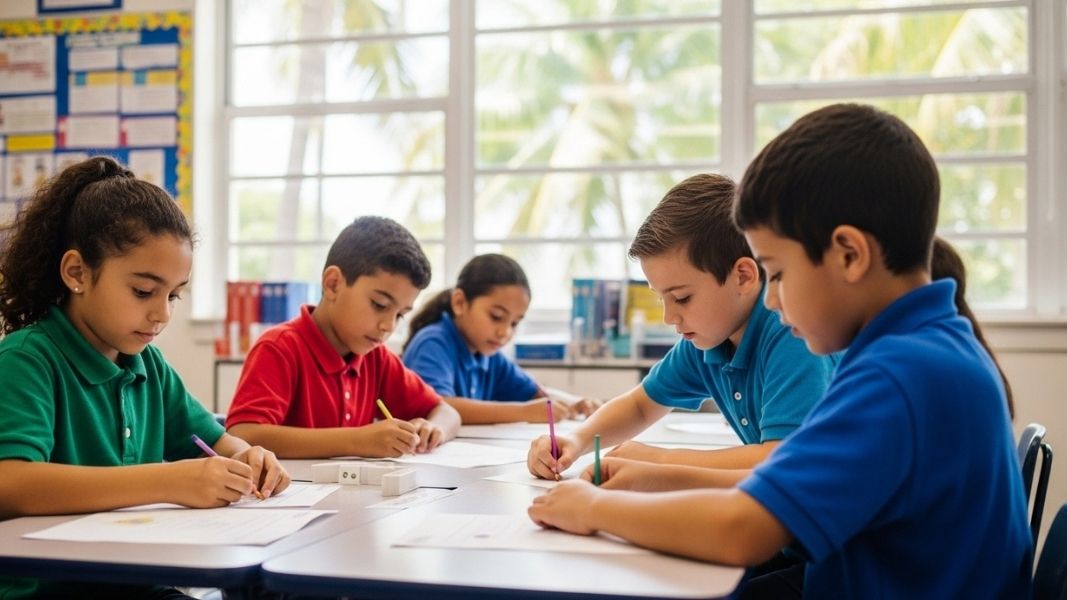
- Preschool/Kindergarten: In Florida, children aged 5 (as of September 1) start kindergarten. Compulsory education begins at age 6.
- Elementary School: Covers grades 1 through 5. Children typically attend these grades between the ages of 6 and 11.
- Middle School: Covers grades 6-8 (approximately ages 11-14). After elementary school, students are gradually introduced to more subject-specific classes.
- High School: Continues through grades 9-12 (ages 15-18). The standard path for a high school diploma involves completing a 24-credit curriculum. In Florida, there are also options to choose programs like the International Baccalaureate (IB) or Cambridge AICE. Students take math, science, English, and social studies, and can optionally choose Advanced Placement (AP/IB) courses or vocational-technical electives.
- Higher Education: Post-high school, students move on to colleges and universities such as the University of Miami (UM), Florida International University (FIU), and Miami Dade College. For instance, the University of Miami ranked 63rd and Florida International University ranked 54th in the 2024-25 US News rankings.
According to Florida law, regular school attendance is mandatory for all children aged 6–16; education is compulsory until age 16. Generally, children start kindergarten at age 5, start 1st grade at age 6, and graduate from high school by the end of 12th grade. In summary, public schools in Miami are free, and the year usually starts in August/September. For detailed information on the academic calendar and registration procedures, the Florida Department of Education’s Moving to Florida portal can be used.
School Process in Miami: A Step-by-Step Guide
- Research and School Selection: Determine the area where you will reside before moving. You can search for schools by city and district using the Florida DOE’s “Moving to Florida” site and review school grades and programs. Moving to neighborhoods with schools you trust is the first step in shaping your settlement plan.
- Preparation of Registration Documents: Gather documents such as proof of residence (lease agreement or utility bill), the child’s birth certificate, immunization records, and previous school transcripts. These documents are mandatory for public school registration. Private schools may require an application form and entrance exam scores.
- Registration for Public School: Apply to the public school assigned to your residential zone (mandatory zone school). Registration dates for the Miami-Dade school district are usually announced in the spring. If you wish to attend a magnet or charter school with central exams, pay attention to the relevant application processes and dates.
- Private School Application: Applications for private schools typically take place in late winter/early spring. Research application and scholarship opportunities for early application advantages. Private schools have limited quotas; admission is usually based on exams or interviews.
- Course Selection and Orientation: Select your course schedule, especially in middle and high school. (Foreign languages in middle school, core and elective courses in high school are planned.) Master the process by attending orientation and parent meetings held at the opening of the school.
- Follow-up and Support: Continuously monitor the student’s academic success by communicating with the school and teachers. In the Miami-Dade region, school grading systems and educational tools are also shared digitally. Get support from guidance counselors and school administration when needed.
Family-Friendly Neighborhoods and Areas Near Schools
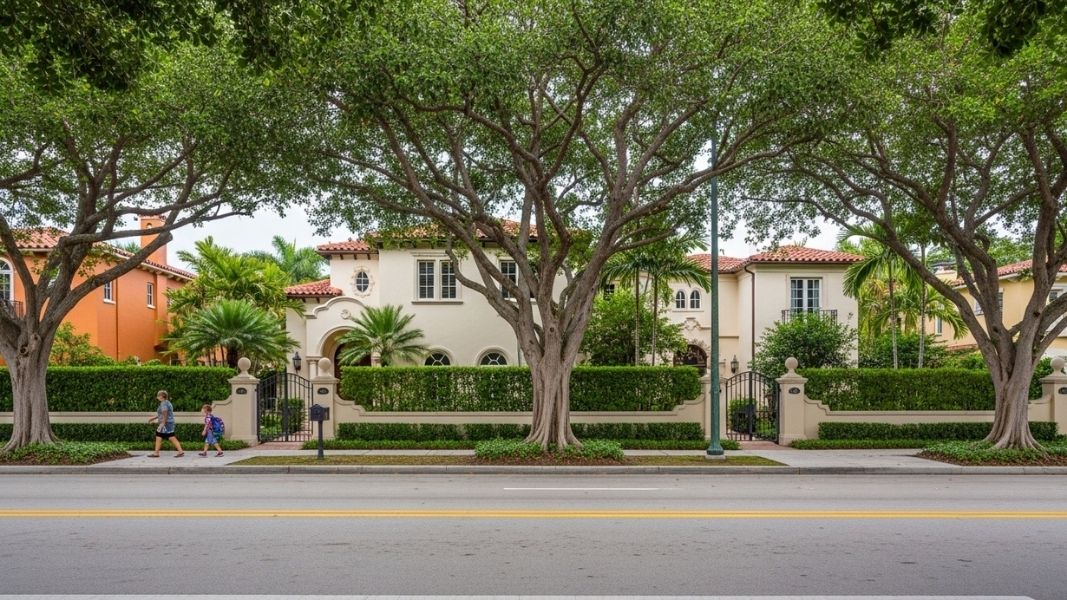
Families in Miami gravitate towards neighborhoods that stand out for education, safety, and quality of life. The following neighborhoods are known for their school quality and family-friendly environments:
- Coral Gables: Known as “The City Beautiful,” this area stands out with its historic architecture and good public school resources. “A-rated” schools like Coral Gables High School and Palmetto Middle School are present. The area is also famous for its proximity to the University of Miami and quality private schools.
- Pinecrest: Known for its villas with large gardens, Pinecrest houses some of Florida’s best public schools. For example, Palmetto Senior High School (Pinecrest) frequently ranks high in state and national rankings. There are also various private schools in the immediate vicinity.
- Palmetto Bay: Known as the “Village of Parks” due to its nearby parks and gardens. Local public schools perform strongly; children can spend time in areas like Coral Reef Park after school. Families can easily access both neighborhood schools and prestigious schools in surrounding areas (e.g., Pinecrest schools).
- Coconut Grove: A smaller and more walkable neighborhood compared to the city center, Coconut Grove hosts reputable private schools (Carrollton School, Ransom Everglades, etc.) and good public schools. Since many schools here are within walking distance of homes, families can easily maintain their daily routines.
- Key Biscayne: Known as an enchanting island neighborhood, Key Biscayne is intertwined with beaches and natural beauty. There is a local public school (Key Biscayne K-8) and a few private schools on the island. Many families can meet all their educational needs in a small area while living in the tranquility of the island.
These and similar neighborhoods are preferred by families for their safe environments, proximity to parks, and easy access to schools. You can review school information in the region you plan to move to via the Florida Department of Education website.
Public vs Private Schools Comparison
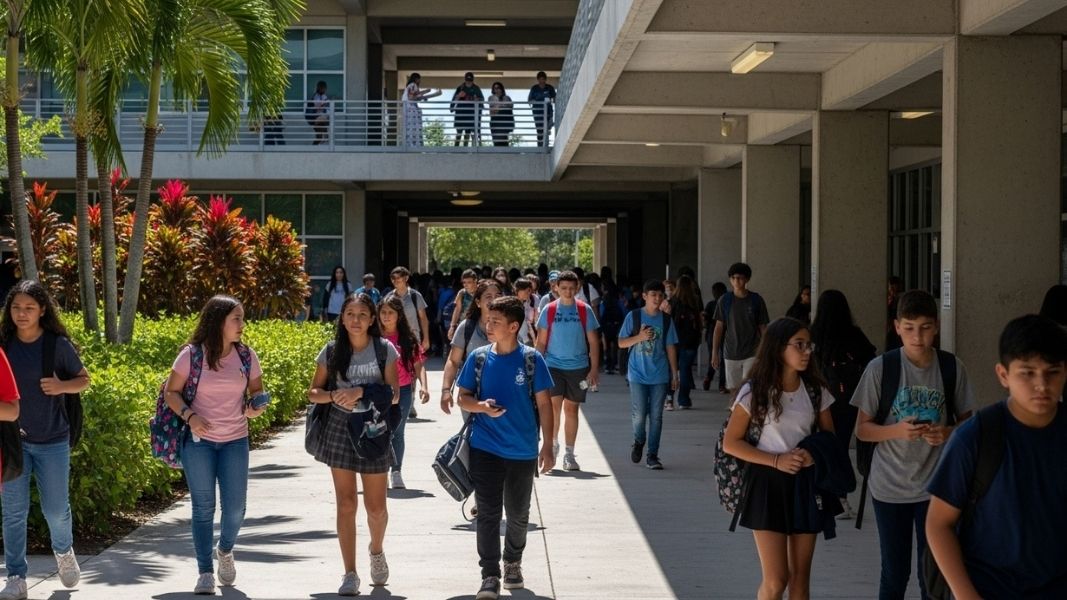
When choosing between public schools and private schools in Miami, it is useful to consider the following differences:
The biggest advantage of public schools is that they are free, but quality can vary by neighborhood. Private schools charge high fees but generally excel in academic success and infrastructure. Families need to make a decision by evaluating these differences according to their priorities.
School Quality and Rankings
Schools in Miami perform strongly both locally and nationally. The M-DCPS district has been an “A” rated school district for many years, with a graduation rate of 92%. In the U.S. News & World Report 2020 rankings, four high schools from Miami-Dade entered the top 100; for example, the School for Advanced Studies ranked 4th nationally with all its campuses, Young Women’s Prep Academy ranked 3rd in the state, and DASH High School ranked 6th. These achievements show that some Miami high schools are competitive at the national level.
According to GreatSchools data, there are 239 regional public schools and 81 charter schools within the city of Miami, while 1,104 private schools exist. This means families have the opportunity to choose from a wide range of options.
In international education rankings, the US remains below or at the average. For example, according to OECD PISA 2018 results, the US ranks 26th in math, 21st in science, and 17th in reading. Florida students score close to the US average in science and reading, while slightly behind in math. This indicates that while Miami schools may not be at the very top globally, their position within America is reasonable.
At the university level, the University of Miami and Florida International University stand out. The University of Miami rose to 63rd place among national universities in 2024-25. FIU was selected as the best university in Florida by the Wall Street Journal; it ranks 54th nationally and 22nd among public universities.
Advantages for Families
Many advantageous features come together for families in Miami:
- Multicultural and Bilingual Environment: Thanks to its proximity to Latin America, Miami offers a multilingual environment, primarily Spanish. Children mingle with different cultures, which gives them a global perspective.
- Climate and Lifestyle: The warm and sunny climate year-round is ideal for outdoor activities. Beaches, parks, and open sports areas provide opportunities for children’s physical development. This ensures that non-educational social and physical activities are also rich.
- Safe Environment and Family-Oriented Neighborhoods: Neighborhoods like Pinecrest, Coral Gables, and Key Biscayne stand out for safety and quality of life. These districts have bike paths, sports clubs, and community centers for young people. High safety norms exist while children spend time in the park or go for walks.
- School Choice and Flexibility: School diversity is high in Florida. Besides public schools, there are numerous magnet schools, charter schools, and private schools. Additionally, Florida supports families’ school choices with various scholarship and tax credit programs for education. In fact, according to experts, Florida is the state with the widest range of school options for families in the US. This allows families to choose the most suitable school for their children.
- Success in Education and Resources: The Miami-Dade region has highly respected educational staff. STEM labs, technology classes, and advanced course materials offered in schools enrich children’s learning. For example, many schools are equipped with modern computer labs and libraries.
- Additional Opportunities and College Prep: Being a metropolitan area, Miami has abundant cultural resources such as theaters, museums, and science centers. Students find chances to participate in extracurricular projects and competitions. Moreover, universities like FIU and UM keep their campuses open; high school students can enroll in summer courses or take some university classes through “dual enrollment.”
All these advantages make Miami attractive for families. Experts and families recommend neighborhoods like Coral Gables, Coconut Grove, and Pinecrest by evaluating lifestyle and safety factors alongside school quality. In conclusion, educational opportunities in Miami are extensive, offer many choices, and are family-friendly.