

Dubai’s Education System | A Guide for Families
19 December 2025
For Turkish families planning to move to Dubai, the education system is one of the most important factors in the decision-making process. Education in Dubai consists of two main structures: public schools and private (international) schools. Due to the high proportion of expatriates, more than 90% of students are educated in private schools.
There are over 200 private schools in Dubai, educating more than 300,000 students from over 180 nationalities. This creates a highly cosmopolitan and multicultural environment for children. For this reason, the vast majority of Turkish families prefer international schools.
Key Differences Between Public and Private Schools
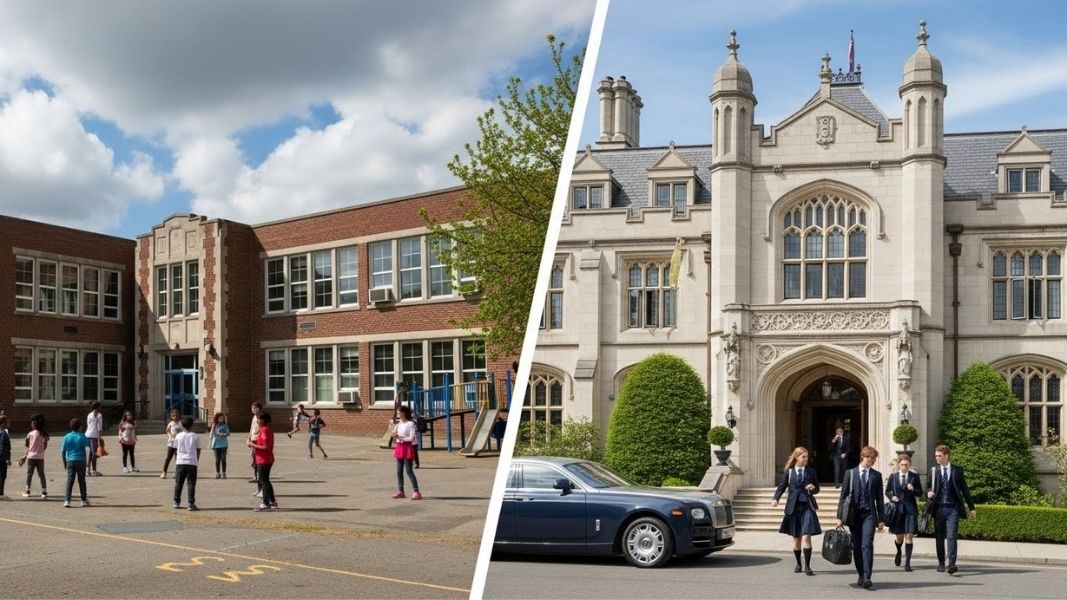
In Dubai, public schools primarily serve UAE nationals. The language of instruction is Arabic, and the curriculum focuses on local culture and religious studies. Admission of foreign students is limited and subject to specific conditions.
Private schools, on the other hand, are open to both Emirati and international students. The language of instruction is generally English and varies depending on the curriculum followed by the school. Arabic is included in the curriculum as a legal requirement. For Turkish families, private schools are almost always the most practical option.
Education Structure and School Life
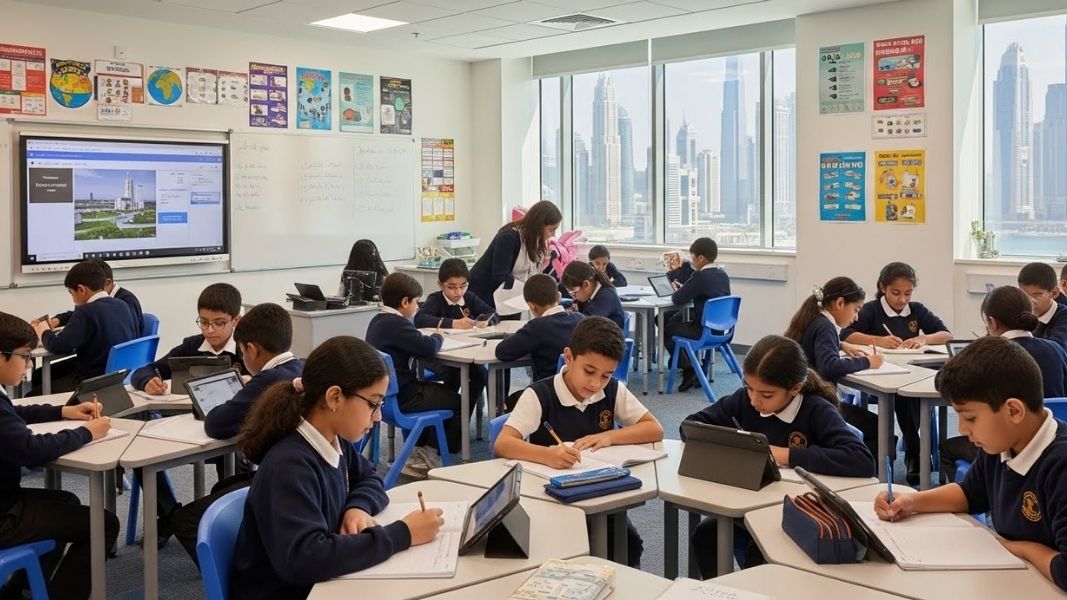
Compulsory education in Dubai starts at age 6 and continues through the end of high school. The school week runs from Sunday to Thursday, with the weekend on Friday and Saturday. Classes usually start early in the morning and end in the afternoon.
In private schools, class sizes are generally smaller and a technology-driven education approach is adopted. Smart boards, tablets, robotics, and STEM activities are common. In addition to academic success, sports, arts, and social development are also emphasized. Many schools encourage students to engage in at least one sport or artistic activity.
Most Common International Curricula in Dubai
Private schools in Dubai offer various international education systems. The curricula most frequently preferred by Turkish families include:
- British Curriculum:
Follows the GCSE and A-Level system and provides a strong foundation for universities in the UK and Europe. - American Curriculum:
Offers flexible course selection, a GPA system, and AP courses, making it particularly advantageous for universities in the USA and Canada. - International Baccalaureate (IB):
One of the most academically demanding programs, recognized by universities worldwide and aimed at developing well-rounded individuals. - Indian Curriculum (CBSE):
Strongly focused on mathematics and science, disciplined, and generally more affordable; however, it is less commonly preferred by Turkish families.
KHDA: The Key to School Quality in Dubai
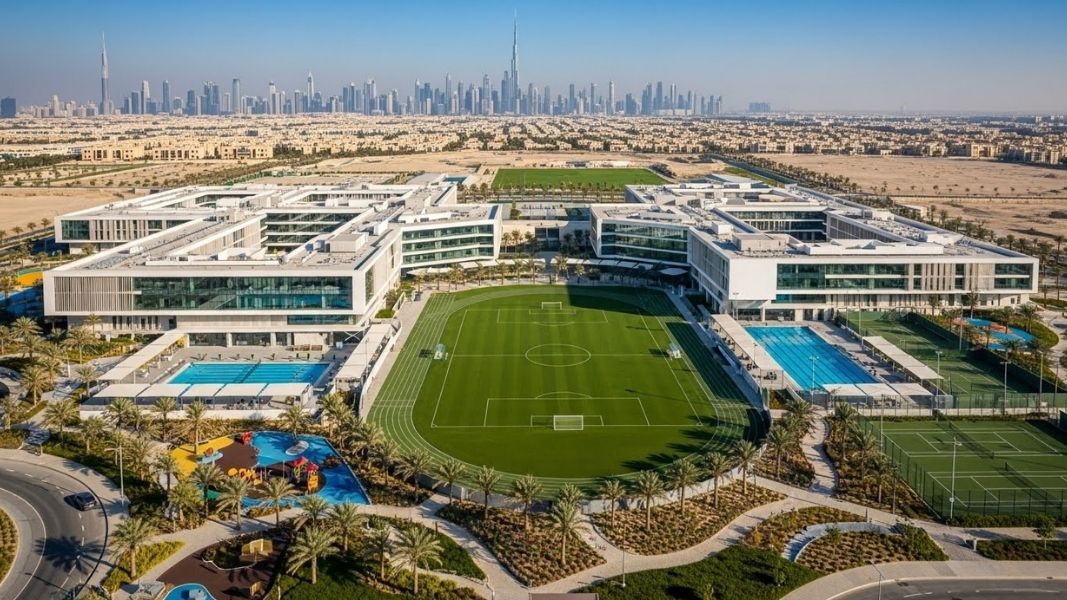
All private schools in Dubai are inspected annually by the KHDA (Knowledge and Human Development Authority). Schools receive ratings such as Outstanding, Very Good, and Good. These evaluations are extremely helpful for parents.
KHDA reports cover a wide range of criteria, including academic performance, teacher quality, campus facilities, and student satisfaction. When choosing a school in Dubai, it is strongly recommended to review KHDA ratings.
Important Notes for Turkish Families
There is no school in Dubai that follows the Turkish national curriculum. Therefore, Turkish families must enroll their children in international schools. The most commonly preferred systems are the British, American, and IB curricula.
For children with limited English proficiency, there is no need to worry; adaptation is generally very fast, especially at younger ages. Schools usually offer additional English support programs. However, maintaining Turkish language skills requires extra attention from families.
School fees vary widely. More expensive does not always mean better; mid-range schools with high KHDA ratings can also provide excellent education. Acting early in the enrollment process is crucial, as places in good schools fill up quickly.