
Living in Miami 2026: Neighborhoods, Taxes, Visas
28 October 2026
Living in Miami means a year-round summer, a bilingual (English and Spanish) city life and residence in a state with no state income tax. On the other hand, housing and insurance costs are high, hurricane season runs from June to November, and most neighborhoods are hard to live in without a car.
This guide covers what you need to know before moving to Miami: neighborhoods, climate, taxes, transport, health insurance, the Turkish community and visa routes, based on official sources. Cost of living, rents and schools are covered in separate guides, so we keep them short here.
Miami at a Glance: Population, Language and Layout
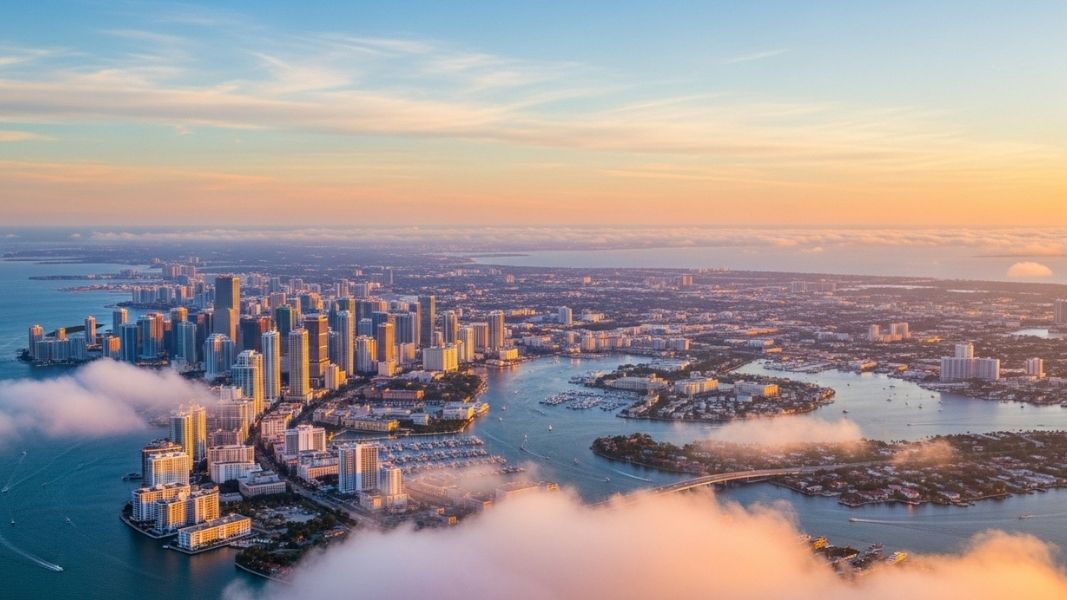
"Miami" can mean three different areas. The City of Miami had 442,241 residents in the 2020 Census. Miami-Dade County, which contains the city, had 2,802,029 residents according to the U.S. Census Bureau's July 1, 2025 estimate. The wider South Florida metro area, including Fort Lauderdale and West Palm Beach, is home to about 6.4 million people.
Miami-Dade is one of the most international places in the U.S. Census data show that 54.5% of county residents were born abroad and 75.3% speak a language other than English at home (2020–2024). Around 70% of residents are Hispanic, and Spanish is heard as often as English. Miami Beach, Coral Gables, Doral and Aventura feel like Miami neighborhoods but are separate municipalities.
Best Neighborhoods to Live in Miami
Where you live in Miami shapes your commute, school options, flood risk and insurance bill. The table below summarizes the areas international residents and families look at most often.
| Neighborhood | Housing type | Best for |
|---|---|---|
| Brickell and Downtown | High-rise condos | Young professionals working in the financial district who want to live car-light |
| Edgewater, Wynwood, Design District | New condo towers, lofts | People who want to be close to art, restaurants and nightlife |
| Coral Gables | Single-family homes, low-rise buildings | Families; tree-lined streets, University of Miami, private schools |
| Coconut Grove | Villas, boutique buildings | Those who want green space, a marina and a slower pace |
| Miami Beach (South Beach, Mid-Beach) | Art Deco buildings, beachfront towers | Beach lovers; tourist traffic is heavy |
| Aventura and Sunny Isles Beach | Oceanfront towers | International buyers, retirees, those who want to be near Fort Lauderdale |
| Doral | Newer communities, townhouses | Families working near the airport; newer, larger homes |
| Key Biscayne and Pinecrest | Single-family homes, estates | Higher-budget families looking for quiet, garden living |
Waterfront and bayside areas carry higher flood and wind risk, and therefore higher insurance premiums. Always check a property's zone on the FEMA flood map before you buy or rent.
Climate and Hurricane Season
Miami is one of the few large cities in the continental U.S. with a tropical climate. According to NOAA's 1991–2020 climate normals, even January, the coolest month, averages daytime highs around 77°F (25°C). More than three quarters of annual rain falls in the May–October wet season, usually as short, heavy afternoon storms.
| Month | Avg. high | Avg. low | Avg. rainfall |
|---|---|---|---|
| January | 76°F (25°C) | 59°F (15°C) | 1.6 in (41 mm) |
| April | 84°F (29°C) | 70°F (21°C) | 3.4 in (86 mm) |
| June | 89°F (32°C) | 76°F (25°C) | 10.5 in (267 mm) |
| August | 91°F (33°C) | 78°F (26°C) | 9.6 in (243 mm) |
| October | 86°F (30°C) | 74°F (23°C) | 7.7 in (194 mm) |
Miami International Airport station, NOAA / National Weather Service 1991–2020 normals. Annual rainfall is about 67 inches (1,700 mm).
When is hurricane season in Miami?
The Atlantic hurricane season runs from June 1 to November 30, with peak activity from mid-August to late October. NOAA says an average season produces 14 named storms, 7 hurricanes and 3 major hurricanes. Most storms do not hit Miami, but preparation is routine for residents: hurricane shutters or impact windows, water and food supplies, and knowing your Miami-Dade evacuation zone.
The most tangible effect of hurricane risk is on your budget. Home insurance policies carry a separate windstorm deductible, and flood insurance is mandatory for mortgaged homes in FEMA high-risk flood zones. When buying a condo, the building's insurance and structural safety status also affect monthly HOA fees.
Tax Advantage: No State Income Tax in Florida
According to the Florida Department of Revenue, Florida does not impose a personal income tax, and this is protected by the state constitution. Workers moving from states such as New York or California keep more of their paycheck. Federal income tax, however, applies in Florida just like in every other state.
| Tax | Florida / Miami-Dade |
|---|---|
| State personal income tax | None |
| Federal income tax (IRS) | Yes; 10%–37% brackets |
| Sales tax | 7% (6% state + 1% county surtax) |
| Property tax | Yes; rate varies by municipality |
| State estate tax | None |
No income tax means the state relies more on property and sales taxes. According to the Miami-Dade Property Appraiser, owners who use the home as their primary residence and hold U.S. citizenship or permanent residency (a green card) can claim the homestead exemption: up to $50,000 off the assessed value, with annual assessment increases capped at 3% or inflation. Non-homestead properties have a 10% cap instead.
If you are moving from Turkey or another country, U.S. tax residency and your home country's tax rules are separate questions. Speak to an adviser who knows both systems before you move.
Cost of Living and Rents
Miami is more expensive than the U.S. average, and most of the gap comes from housing. Rent or mortgage, HOA fees and insurance drive the budget. We break down groceries, utilities, transport and healthcare line by line in our cost of living in Miami guide.
If you plan to rent, prices vary widely by neighborhood: a studio in Brickell and a three-bedroom townhouse in Doral can sit in a similar rent band. See our Miami rental prices guide for current averages by neighborhood.
Getting Around: Do You Need a Car in Miami?
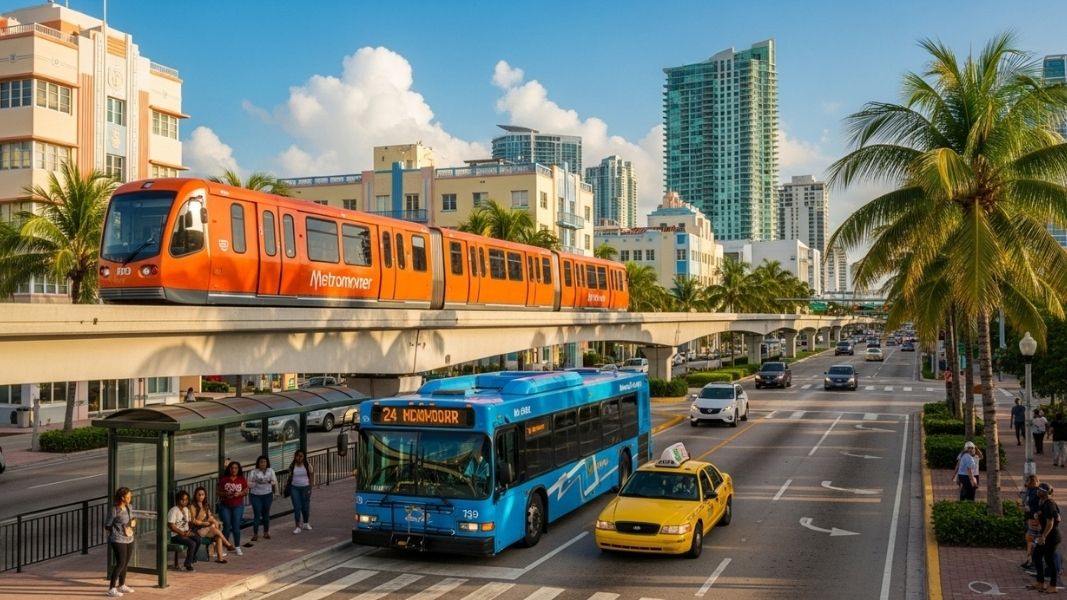
Short answer: in most neighborhoods, yes. Miami-Dade's transit network works well in the urban core, but bus service in the suburbs is infrequent, and most residents drive.
- Metrorail: rail line linking the airport, Downtown, Brickell, Coconut Grove and Dadeland.
- Metromover: free automated people mover in Downtown, Brickell and Omni.
- Metrobus: county-wide bus network.
- Brightline: higher-speed train connecting Miami with Fort Lauderdale, West Palm Beach and Orlando.
According to Miami-Dade's official fare guide, a single Metrorail or Metrobus ride costs $2.25. In October 2026 county commissioners approved raising the fare to $2.75 from January 1, 2027, the first increase in 13 years. New Florida residents must get a Florida driver license within 30 days of establishing residency.
Miami International Airport (MIA) and Fort Lauderdale airport to the north offer a wide flight network to Latin America and Europe, including nonstop flights to Istanbul.
Healthcare and Health Insurance
The U.S. has no universal public health system, so health insurance is one of the biggest items in a Miami budget. An uninsured emergency room visit or hospital stay can cost thousands of dollars.
There are three main routes to coverage. Most workers are insured through their employer. Those without employer coverage can choose a plan on the federal marketplace, HealthCare.gov; many lawfully present immigrants are eligible, but eligibility depends on visa type, and enrollment opens each autumn. Newcomers and short-term visa holders typically rely on international private health insurance.
Miami is strong on healthcare: the county's public hospital system Jackson Health System, the University of Miami's medical center and several large private hospital groups are all here. Spanish-speaking doctors are easy to find.
Education: Schools and Universities
Miami-Dade County Public Schools is one of the largest public school districts in the U.S., and enrollment is generally based on your address. There are also magnet and charter schools, IB programs and many private schools. The University of Miami and Florida International University (FIU) are the city's major universities. For school options by area, see our Miami education guide.
Social Life and the Turkish Community
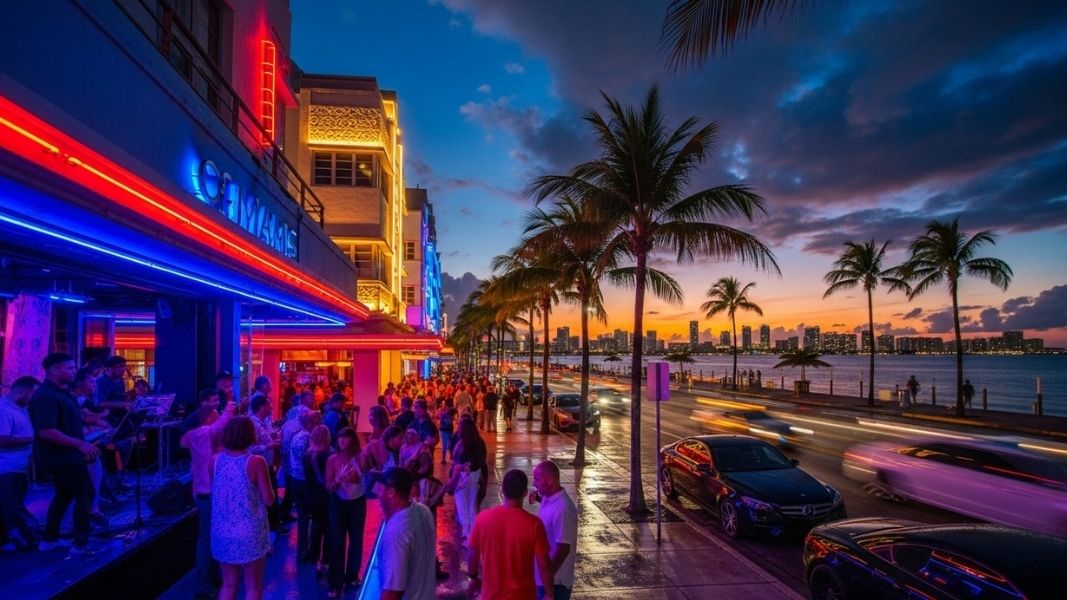
Social life in Miami happens outdoors: beaches, parks, marinas and open-air restaurants are used all year. International events such as Art Basel Miami Beach, the Miami Open tennis tournament and the Formula 1 Miami Grand Prix draw crowds every year. Little Havana is the center of Cuban culture, while Wynwood is known for street art.
The Turkish community is smaller than in New York or New Jersey, but growing. Turkey's Consulate General in Miami serves Turkish citizens in Florida as well as Georgia, North and South Carolina and Puerto Rico. South Florida also has Turkish-American associations, a Turkish-American chamber of commerce, and Turkish restaurants and grocery stores, especially around Brickell, Aventura and Doral. There is no current official count of Turkish residents in Miami.
Visa and Residency Options
To live in Miami you need legal status in the U.S. Note that buying a home in the U.S. does not, by itself, give you a visa, residency or a green card. The most common routes are:
| Visa | Who it is for | Note |
|---|---|---|
| B-1/B-2 | Tourists and business visitors | No work authorization; stays usually up to 6 months per entry |
| E-2 (treaty investor) | People making a substantial investment in a U.S. business | Available to nationals of treaty countries such as Turkey and the UK; renewable, but not a green card |
| EB-5 (investor green card) | Investors in job-creating projects | Minimum $800,000 (targeted employment area) or $1,050,000; amounts are expected to be adjusted for inflation in 2027 |
| H-1B / L-1 | Hired by a U.S. employer / intra-company transfer | Employer sponsorship required |
| F-1 | University and language school students | Limited work rights |
Visa rules and investment thresholds change. Check the latest announcements from the U.S. Department of State and USCIS and speak to an immigration attorney before making decisions.
Pros and Cons of Living in Miami
| Pros | Cons |
|---|---|
| No state income tax | High housing, insurance and HOA costs |
| Warm weather, beaches and outdoor life all year | June–November hurricane season, summer humidity |
| International, multilingual environment | Limited public transit, heavy traffic |
| Strong flight links to Latin America and Europe | Flood risk in coastal neighborhoods |
| Growing finance and tech sector | Smaller Turkish community than in the Northeast |
In short, living in Miami suits people who come for the tax advantage and the climate and can absorb high housing and insurance costs. Spending a few weeks in different neighborhoods before you move, ideally during hurricane season, is a good way to test your commute and the summer weather.
Sources: U.S. Census Bureau QuickFacts, Miami-Dade County (V2025 population estimate, ACS 2020–2024); 2020 Census; NOAA / National Weather Service Miami, 1991–2020 climate normals; NOAA National Hurricane Center; Florida Department of Revenue; Miami-Dade Property Appraiser; Miami-Dade Department of Transportation and Public Works fare guide (October 2026); FLHSMV; USCIS; U.S. Department of State. Rules and fees change; check current official announcements before making decisions.
Frequently Asked Questions
Is it expensive to live in Miami?
Yes. Miami's cost of living is above the U.S. average, driven mostly by rent, HOA fees and home insurance. The lack of a state income tax offsets part of the difference.
Does Florida have a state income tax?
No. Florida does not tax personal income, and this is protected by the state constitution. Federal income tax still applies, and the sales tax in Miami-Dade is 7%.
When is hurricane season in Miami?
The Atlantic hurricane season runs from June 1 to November 30 each year. Peak activity is from mid-August to late October.
Can you live in Miami without a car?
In central areas like Brickell and Downtown you can get by with Metrorail and the free Metromover. In the suburbs transit is infrequent and a car is close to essential.
What are the best neighborhoods to live in Miami?
Brickell and Downtown suit young professionals, Coral Gables, Coconut Grove and Pinecrest suit families, and Miami Beach, Aventura and Sunny Isles Beach suit those who want to live by the ocean.
Does buying a home in Miami give you residency?
No. Buying property in the U.S. does not, by itself, give you a visa, residency or a green card. You need a visa route such as E-2, EB-5, H-1B or F-1.